


Jigslip - Easy Jigsaw
4.823.00 Reviews
App Specs
- Version
- 1.0.12
- Updated On
- License
- Free
- Downloads
- 100,000+
- Developer
- GAFV GAMES
- Categories
- Board
- Platform
- Android
Screenshots
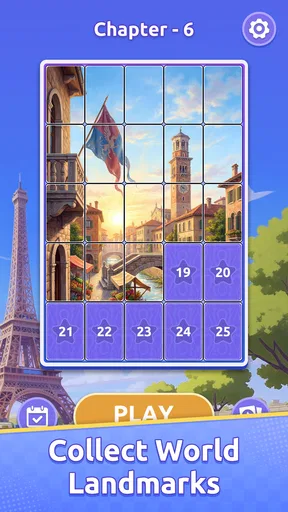
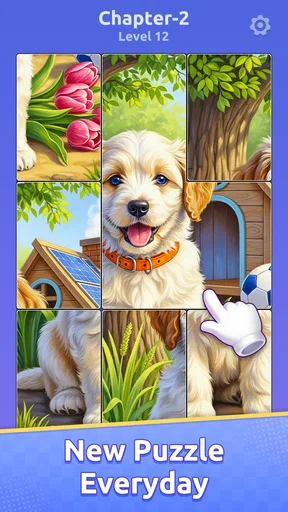
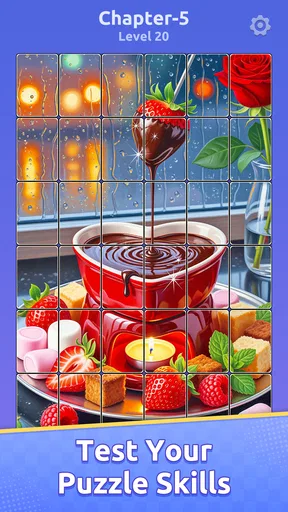
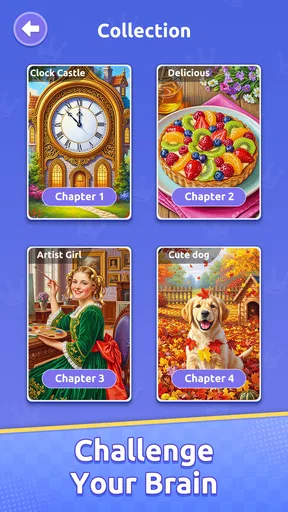

 Analysis by AppCompare
I spent time with Jigslip - Easy Jigsaw, a free board game from GAFV GAMES that keeps its idea wonderfully focused: turn a jigsaw-style puzzle into a small, approachable activity you can pick up whenever you have a few quiet minutes. Its store summary calls it a jigsolitaire puzzle game, while the short description reduces the concept to “Jigslip.” That simplicity is important, because this is not trying to be a large adventure, a competitive board platform, or a complicated strategy title. It is built around the calm satisfaction of arranging pieces until an image comes together.
My first impression was that the game is easiest to appreciate when I treat it as a short mental break rather than a major gaming destination. The board-game classification fits its deliberate pace, and the Everyone age rating makes it a natural option for households looking for something gentle and easy to understand. It is available at no cost, which removes the biggest barrier to trying it. The question is therefore less about whether it is affordable and more about whether this particular style of puzzle gives you enough enjoyment to keep returning.
How the free puzzle experience feels in everyday use
The strongest part of the concept is its low commitment. I can imagine opening it while waiting for an appointment, taking a short break from work, or settling down in the evening when I want something more active than scrolling but less demanding than a full game. A jigsaw puzzle normally needs physical space, a surface, and enough uninterrupted time to leave the pieces spread out. A mobile version is more convenient because the activity stays inside the phone and can be paused when real life interrupts.
That convenience also changes the mood of the hobby. Physical jigsaws are tactile and often social, while a phone-based puzzle is personal and portable. I would choose this game when I want the visual sorting and gradual progress of a jigsaw without committing a table or carrying a box. I would not choose it as a replacement for the feel of cardboard pieces, though. Anyone who loves the click of a piece locking into place, the texture of the image, or the shared process around a table will still get something different here.
The “jigsolitaire” idea suggests a solitary experience, and that is where the game’s appeal is clearest. It gives the player a quiet task with a visible goal instead of asking for fast reactions or complicated rules. That makes it suitable for people who enjoy pattern recognition, visual organization, and incremental progress. It can also work for younger players who are comfortable using a touch screen, although adults may find the same relaxed structure useful after a busy day.
One practical way I would use it is as a transition between activities. Rather than opening a social feed during a five-minute pause, I can complete a small portion of a puzzle and stop at a natural point. This is a better fit for short attention windows than a game that requires a long match or punishes leaving halfway through. The trade-off is that players who want constant novelty, a strong narrative, or a clear competitive ladder may find the experience too quiet.
What the price tells me about the decision
The game is free, so trying it does not require a purchase decision. That matters for a puzzle title because personal taste is especially difficult to predict from a description. Some people find arranging pieces deeply relaxing; others lose interest quickly unless there is a story, a score chase, or a social goal. Free access lets you test that fit directly instead of paying first and discovering that the pace is not for you.
Worth Reading Before You Choose

EA SPORTS FC Mobile 26 Is a Bigger Football Game, but It Takes Time

Flipboard Shows What News Apps Must Do Beyond the Feed

Switching to Android Auto Means Rethinking Your Driving Routine

Google Calendar Makes a Crowded Week Easier to Manage

Ludo King Makes the Most of the Minutes Between Plans

Baby Panda World Brings Quick Play to Modern Phones, but Its Game Library Feels Busy
I see the free price as the clearest value proposition here: the entry cost is low, and the potential benefit is a convenient source of light entertainment. I would still separate that from claims about total value. A free game can be worthwhile even if it becomes an occasional tool rather than a daily habit, but its long-term value depends on how much variety and replay appeal you personally get from the puzzle format. The available facts establish that access is free; they do not turn that into a promise of unlimited depth.
That distinction is useful when comparing it with physical jigsaw boxes or paid mobile puzzle games. A physical puzzle may offer a richer tactile experience but takes up space and costs money. A paid digital alternative may provide a more extensive package, but it asks for commitment before you know whether its presentation suits you. Jigslip occupies the easy-to-test end of that spectrum. I would download it for a quick trial, while I would be more selective about paying upfront for a similar concept.
The game has an average rating of 4.9 from around 3.4 thousand ratings, and it has passed over 100 thousand installs. Those figures suggest that the simple format has found a receptive audience, but I would not use them as a substitute for personal testing. Ratings can tell me that many players enjoy the experience; they cannot tell me whether I prefer a calm solo puzzle to a more feature-heavy board game. The number of written reviews is 22, which gives the rating some context: the numerical response is broad, while the written commentary is comparatively limited.
Small habits that make the format more satisfying
My best advice is to decide what kind of session I want before starting. If I am using the game to relax, I avoid treating every move as a test of speed. I look for broad visual relationships first, then use smaller details to refine the arrangement. That approach makes the activity feel less like a chore and more like a controlled wind-down. It also helps prevent the common mistake of moving pieces randomly when the image becomes difficult to read.
A second useful habit is to use natural stopping points. With a portable puzzle, there is no need to finish an entire image in one sitting. I can stop after organizing a section, then return later with a fresh eye. This is especially helpful on a small phone screen, where prolonged concentration can become tiring. The game’s value improves when I treat it as a series of short sessions rather than demanding a complete result every time I open it.
I also recommend judging the game by concentration quality, not just completion. A puzzle can be useful even when I do not finish it, because the process gives my attention one calm object to follow. That makes it a plausible alternative to passive phone use. On the other hand, if I need a clear reward loop, increasing difficulty, or a reason to improve from one session to the next, I should compare it with a more structured puzzle game before settling on this one.
Where the experience may create friction
The same simplicity that makes the game approachable can limit its appeal. A player who expects a deep board-game system may find a jigsaw-focused title too narrow. There is no reason to choose it for tactical competition, character development, or a story campaign. Its core pleasure comes from visual assembly, so anyone who does not enjoy that activity will not be rescued by the surrounding category label.
Screen size is another practical consideration. A phone is convenient, but it is not as spacious as a table. Sorting and placing pieces can feel less comfortable for someone who prefers a large display or has difficulty distinguishing small visual details. I would try it on the device I plan to use regularly before deciding whether it can replace my usual jigsaw routine. The free price makes that experiment sensible, but it does not remove the physical limitations of mobile play.
The age rating of Everyone is reassuring for broad accessibility, yet it should not be confused with a guarantee that every child will find the controls or visual tasks equally easy. Younger players may need help getting used to the interaction, while older players may prefer a larger screen. For a family, I would treat it as a simple shared discovery activity rather than assume that the same puzzle experience will suit every person in the room.
There is also a difference between occasional relaxation and lasting engagement. I can see myself returning when I want a quiet distraction, but players who measure value by daily progression, collection systems, or social competition may need something more substantial. That is not a flaw in the concept; it is a boundary. The game is strongest when I want exactly what it offers and weakest when I ask it to behave like a different kind of title.
Who is most likely to get real value from it?
I would recommend it first to people who already enjoy jigsaw puzzles and want a portable version. It is also a good candidate for anyone looking for a calm board game with a very low entry barrier. The free price makes it suitable for a casual trial, and the Everyone rating supports its use across a wide age range. A new player does not need to learn a complicated rule set before discovering whether the activity feels satisfying.
It may also appeal to people who want a screen activity that is more focused than endless browsing. The important distinction is that it asks for attention without demanding urgency. During a lunch break, I could use it for a short reset; during a longer evening, I could spend more time assembling a picture. That flexibility is a genuine strength, especially for people whose schedules make fixed-length games inconvenient.
I would be more cautious about recommending it to someone who needs strong stimulation. If your favorite board games involve bluffing, resource management, head-to-head decisions, or elaborate planning, this is probably not the right first choice. The same applies to players who want a competitive reason to replay a completed puzzle. In those cases, a strategy board game or a more feature-rich digital puzzle may deliver better value, even if it costs more or takes longer to learn.
It is also not the ideal replacement for a physical jigsaw if the sensory and social sides matter most to you. A box on a table invites other people to join, allows several players to sort pieces together, and creates a finished object that can be displayed. This mobile game is better for private, portable sessions. I would keep both options available rather than expecting one to reproduce the other perfectly.
Compatibility, version, and what to expect before installing
The current version is 1.0.12, and the game runs on Android 6.0 or later. That makes the minimum operating-system requirement relatively approachable for people using older compatible Android devices. Before installing, I would still check that my phone has a comfortable screen and that I am happy playing a visually focused puzzle on it. Compatibility can make installation possible, but comfort determines whether I will actually return.
GAFV GAMES is the developer behind the title. The game was released on December 24, 2025, so its presence in the catalog is relatively recent compared with long-established puzzle brands. I would interpret that as a reason to approach it with curiosity rather than assume it has the breadth or history of a mature franchise. Its current appeal rests on the directness of the puzzle concept and the fact that trying it is free.
One question many people have before installing a free game is whether it is worth the space and attention if they only play occasionally. In this case, the answer depends on whether you value having a ready-made quiet activity on your phone. If you regularly reach for short distractions, the convenience may justify keeping it. If your phone is already crowded with games you rarely open, I would install it only when I specifically want a jigsaw-style experience.
Another sensible question is whether it can replace a more traditional puzzle app. I would say it can replace the basic use case—arranging pieces alone in a portable format—but not every surrounding feature a different app might offer. If you prioritize competition, social play, advanced progression, or a larger variety of game modes, compare those needs carefully before making it your main puzzle app. Jigslip is a focused choice, not an all-purpose board-game collection.
My buy-or-skip verdict
I would choose this game when I want a free, low-pressure jigsaw activity that fits into short breaks and does not require a table, a box, or a long tutorial. Its strongest qualities are accessibility, portability, and a clear central idea. The high average rating and broad install count show that the approach has connected with many players, while the free price makes the decision easy: try it, play a few sessions, and keep it if the quiet puzzle rhythm works for you.
I would skip it if I am looking for a substantial board-game system, a competitive challenge, or a story-driven reason to keep playing. I would also skip it as a physical-jigsaw replacement if the tactile and social experience is the main point for me. Those are not minor preferences; they define whether this kind of app feels useful or underpowered.
My final view is positive but deliberately specific. Jigslip - Easy Jigsaw is best understood as a convenient solo puzzle companion, not a complete board-game universe. Because it is free, the risk of trying it is small, and its Everyone rating makes it approachable for a broad audience. If you enjoy assembling images and want that pastime available in your pocket, I think it is worth a place on your Android device. If you need competition, depth, or a richer social experience, spend your time elsewhere and choose a game designed around those priorities.
Pros
- Simple controls make puzzle assembly easy for beginners.
- Clean interface keeps the focus on the current puzzle.
- Multiple difficulty levels suit casual and experienced players.
- Relaxing gameplay works well for short offline sessions.
- Completed puzzles provide a satisfying sense of progress.
Cons
- Some puzzles may feel repetitive after extended play.
- Small pieces can be difficult to select on compact screens.
- Advanced players may want more challenging puzzle options.
- Hints or extra features may be limited in the free version.
- Frequent players could run through the available content quickly.
FAQs for Jigslip - Easy Jigsaw
What is Jigslip - Easy Jigsaw?
Jigslip - Easy Jigsaw is a casual puzzle game focused on completing colorful jigsaw puzzles in a simple, relaxing format. Players arrange scattered pieces to recreate an image, making it suitable for short play sessions or longer periods of concentration. The game is designed to be approachable for beginners while still offering enough variety to keep regular puzzle fans interested.
Is Jigslip - Easy Jigsaw suitable for beginners?
Yes, Jigslip - Easy Jigsaw is generally suitable for beginners because its gameplay is easy to understand and does not require previous puzzle experience. The basic objective is to place matching pieces correctly until the picture is complete. However, the challenge can increase with more pieces or detailed images, so experienced players may also find levels that require patience and careful observation.
Can I play Jigslip - Easy Jigsaw offline?
Availability of offline play may depend on the specific version of Jigslip - Easy Jigsaw and the device being used. Basic puzzle sessions may work without a continuous internet connection, but features such as advertisements, online content, updates, cloud progress, or additional puzzle downloads could require internet access. It is best to open the game once while connected before relying on it offline.
Does Jigslip - Easy Jigsaw contain advertisements or in-app purchases?
Jigslip - Easy Jigsaw may include advertising or optional in-app purchases, as is common with free-to-download mobile puzzle games. Ads can appear between puzzles or during certain interactions, while purchases may offer benefits such as removing advertisements, unlocking content, or obtaining extra features. Before downloading, check the current Google Play or App Store listing for the latest pricing and purchase details.
Is Jigslip - Easy Jigsaw safe to download?
Jigslip - Easy Jigsaw should be downloaded from the official Google Play Store or Apple App Store rather than from unofficial websites. Before installing, review the developer name, recent user feedback, requested permissions, age rating, and privacy information. App features and permissions can change through updates, so checking the store listing and keeping your device software current is recommended for a safer experience.


